
Most people don’t think they have a spending problem.
They don’t wake up planning to waste money. And yet, at the end of the month – the numbers just don’t add up.
That gap between what you intend to do and what actually happens is where psychological spending triggers live. They’re quiet, subtle, and easy to dismiss.
And that’s exactly why they cost you so much money.
“You don’t overspend because you’re careless. You overspend because your environment is engineered to make you.”
In this guide, we’ll unpack the five most powerful psychological triggers that drive impulse spending – and give you a concrete system to disrupt them before they empty your wallet.
→ Hidden Monthly Expenses That Are Draining Your Budget
Spending Is Not Logical – It’s Behavioral
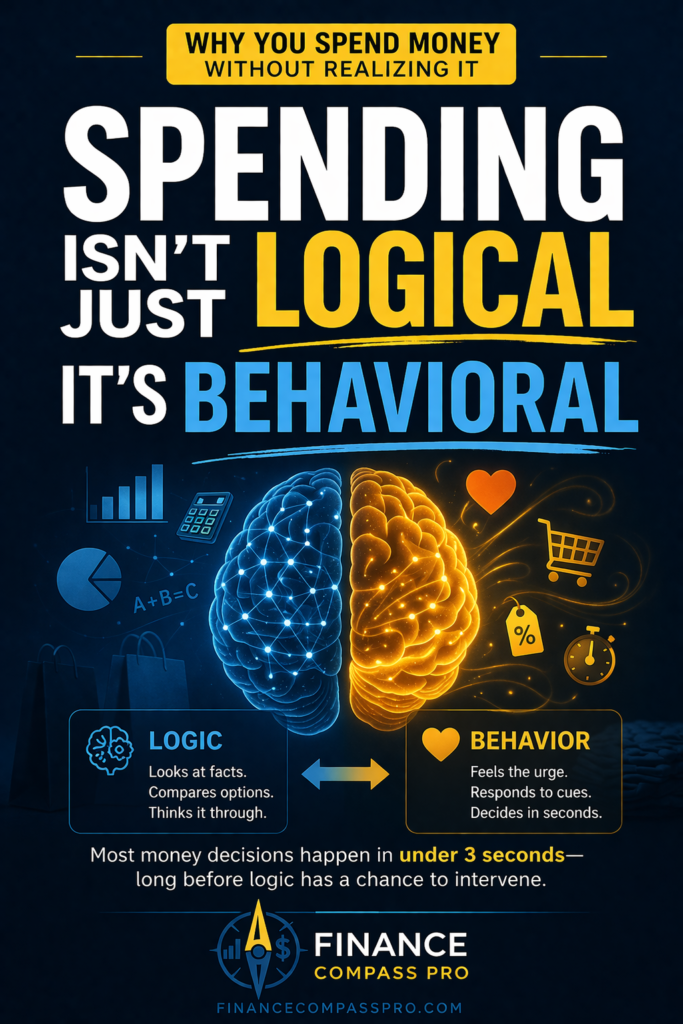
We like to believe that money decisions are based on logic. If something is useful, we buy it. If it’s unnecessary, we don’t.
But in reality, most spending decisions are made in under three seconds – long before logic has a chance to intervene.
A discount appears. A timer counts down. A product is labeled “best seller.”
And suddenly, the decision feels obvious – not because it’s rational, but because it feels right.
Research in behavioral economics consistently shows that emotional and environmental cues drive far more of our financial decisions than we realize.
Dan Ariely’s work on predictable irrationality, and Nobel Prize-winner Richard Thaler’s research on nudge theory, both point to the same conclusion: humans are not the rational financial actors we imagine ourselves to be.
⚡ KEY INSIGHT
You don’t spend because you decide to. You spend because something triggered you. Recognizing this distinction is the first – and most important – step toward real financial control.
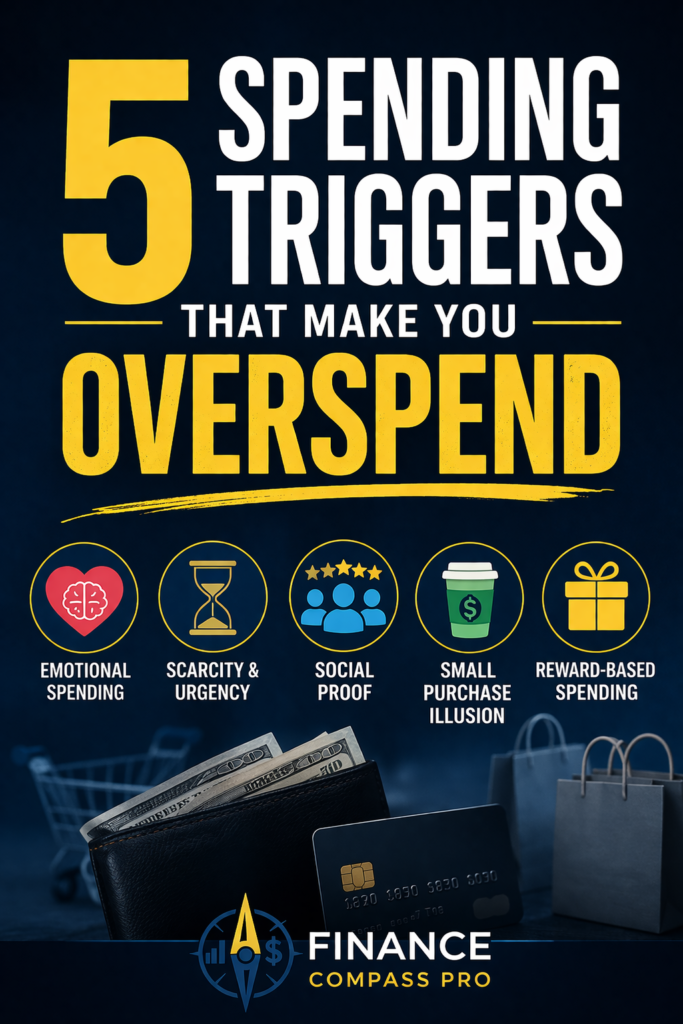
The 5 Most Powerful Psychological Spending Triggers
Once you start noticing these patterns, you’ll see them everywhere – not as dramatic events, but as small, invisible nudges. And those nudges add up to thousands of dollars a year that quietly disappear without a single conscious
decision.
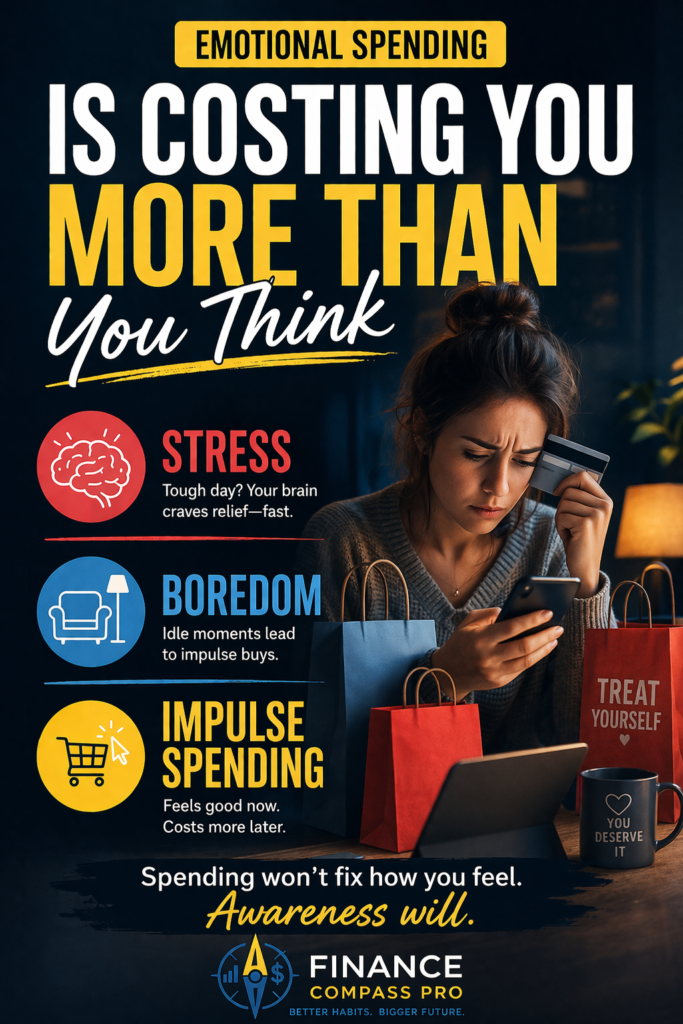
1. Emotional Spending
Stress, boredom, frustration, even celebration – these emotions don’t just influence your mood. They hijack your decisions.
Buying something delivers a temporary hit of control or reward that feels like progress, even when it’s not. After a hard day at work, a quick online purchase feels like a small victory. After a fight, retail therapy feels like recovery.
The real danger isn’t a single emotional purchase. It’s the pattern forming beneath it – spending becoming your default response to discomfort. Once that pattern is wired in, it runs automatically, beneath awareness.
2. Scarcity and Urgency
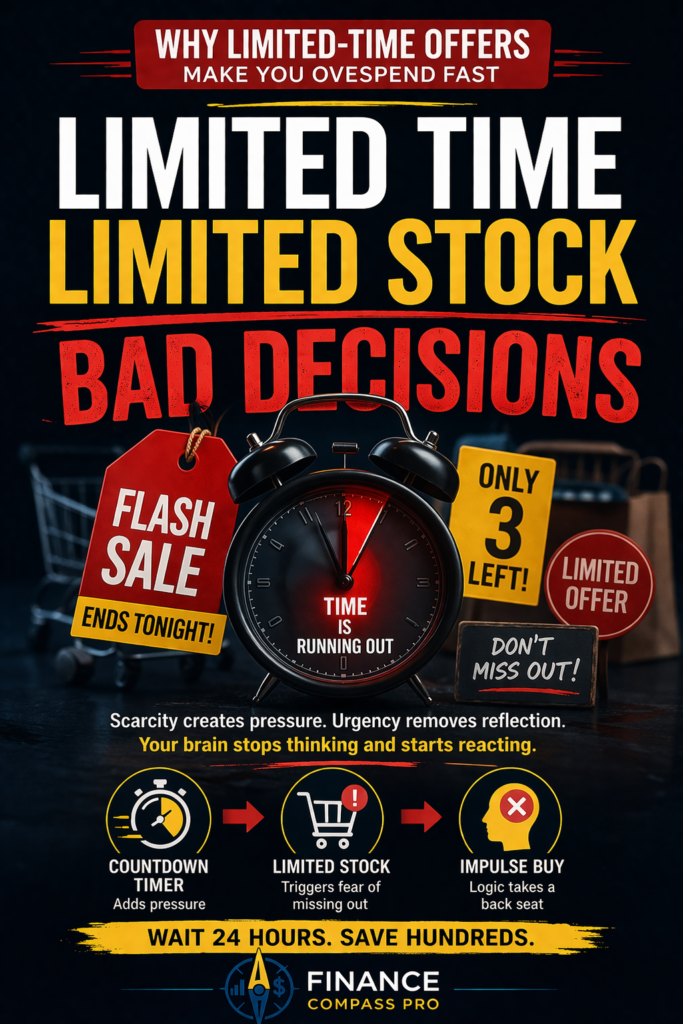
“Only 3 left.” “Sale ends tonight.” “Limited-time offer.”
These phrases aren’t random. They are precision-engineered to bypass hesitation.
Scarcity creates pressure. Urgency removes the time needed for reflection. When they combine, your brain stops evaluating and starts reacting. You don’t ask “Do I need this?” – you ask “Can I still get it?”
Amazon’s countdown timers. Flash sales. One-day deals. These are not features.
They are psychological levers pulled with one goal: to make waiting feel dangerous.
3. Social Proof
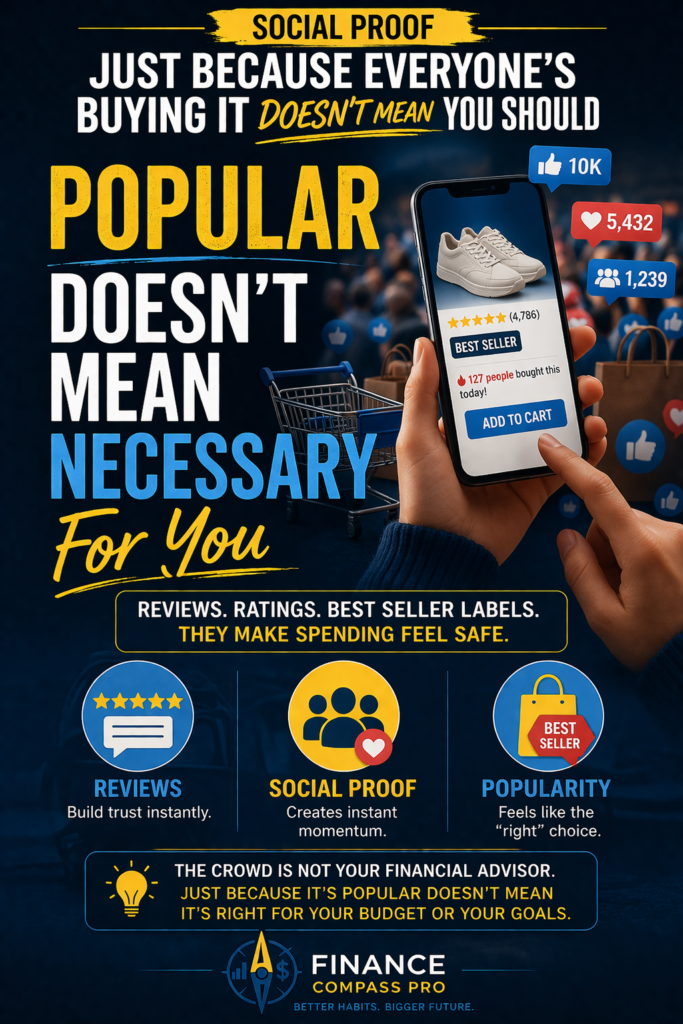
If everyone else is buying something, it must be a good decision.
That’s the unconscious assumption. Reviews, ratings, and “most popular” labels reduce uncertainty and make spending feel safe and validated. Five-star ratings trigger trust. “127 people bought this today” creates momentum.
But safety and correctness are not the same thing. Something can be wildly popular and still be completely unnecessary for your specific financial situation. The crowd is not your financial advisor.
4. The “Small Purchase” Illusion
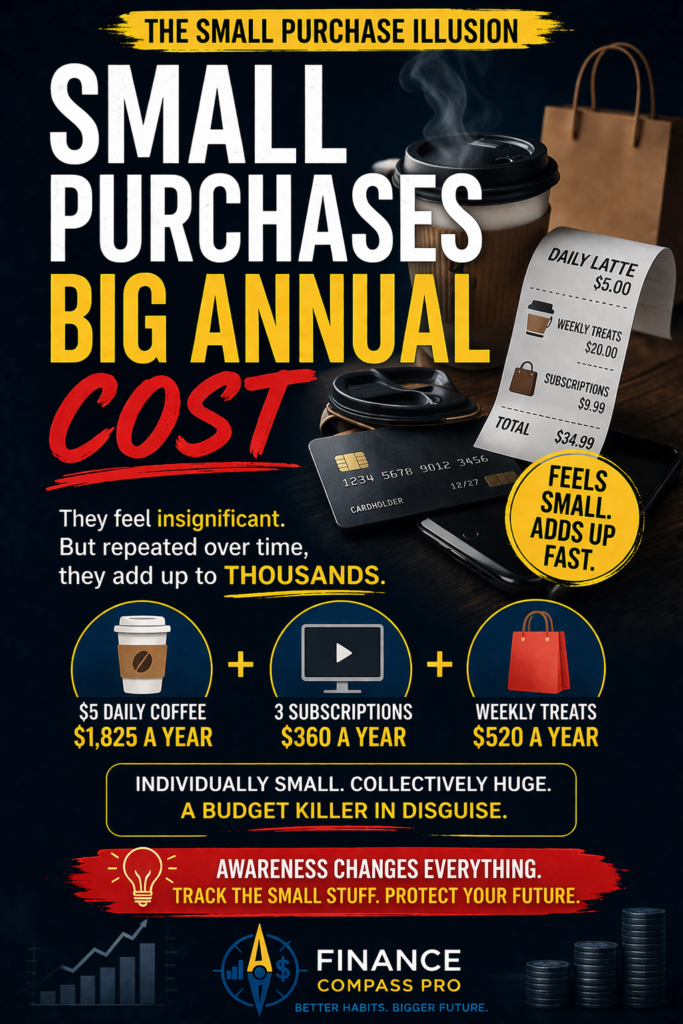
A coffee. A $9.99 subscription. A quick impulse order on your lunch break.
Each one feels insignificant. And individually, it is.
But repeated over weeks and months, these micro-purchases form a system – one that quietly drains hundreds or even thousands of dollars per year. A $5 daily coffee habit costs $1,825 annually. Three forgotten streaming subscriptions add up to $360. A weekly “small treat” totals $520.
Most people lose financial control not through one catastrophic decision, but through hundreds of small, individually justifiable ones. The math is invisible until you actually run it.
5. Reward-Based Spending
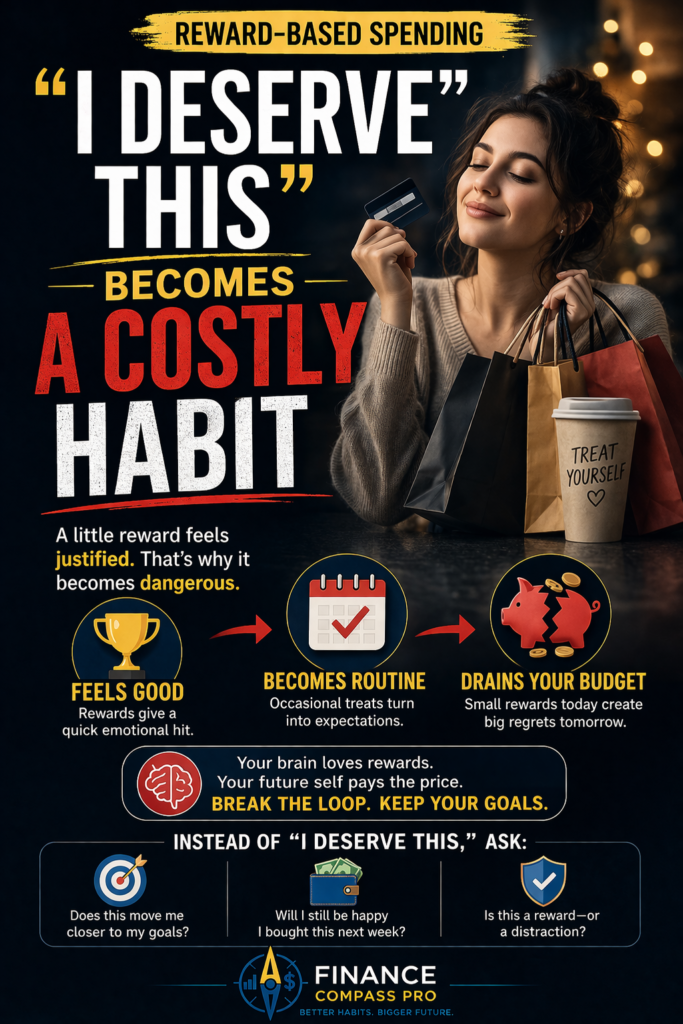
“I worked hard today.” “I deserve this.” “I’ve been so good with money lately.”
This is one of the most dangerous triggers because it feels entirely justified – and sometimes it genuinely is. The problem is frequency.
When rewards become routine, they stop being rewards and start becoming expectations. And expectations are expensive. The occasional treat becomes a daily necessity. The special splurge becomes the baseline. And the financial
cost compounds invisibly, hidden behind a layer of well-deserved satisfaction.
Why Awareness Changes Everything
The goal here is not to eliminate spending – that’s both unrealistic and unnecessary. The goal is to recognize the moment before the decision happens.
Because that moment is where real control exists.
Most people try to fix overspending after the fact. Budgets. Restrictions.
Willpower. But those approaches fail if the underlying triggers remain untouched.
Awareness works differently. It interrupts the pattern at the source.
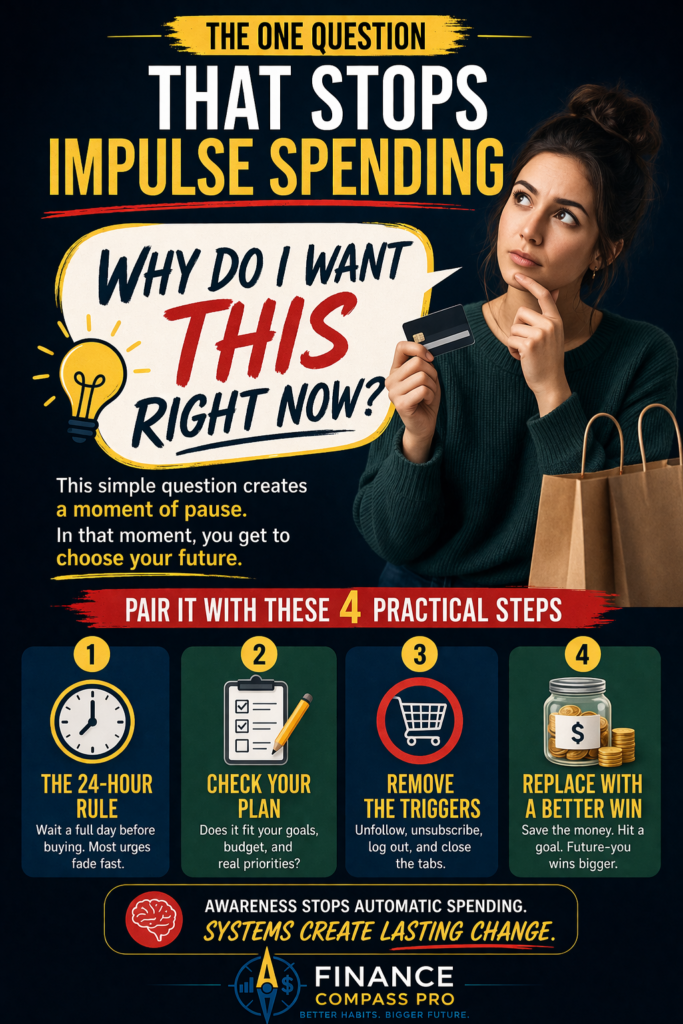
Instead of asking “Can I afford this?”, start asking:
THE QUESTION THAT CHANGES EVERYTHING
“Why do I want this right now?”
That question slows everything down. And in that pause, you create space between impulse and action – the space where financial decisions are actually made intentionally, rather than automatically.
The fastest way to identify your triggers is to make your spending visible.
A simple budgeting app that categorizes your purchases in real time will reveal patterns you’ve been too close to notice. Most people are genuinely surprised by what they find.
→ How to Build a Simple Budget That Actually Works
Build a System That Works With Your Behavior
Control doesn’t come from discipline alone. It comes from structure.
A well-designed financial system reduces the number of decisions you need to make – because fewer decisions mean fewer chances to react impulsively. This is why environments matter more than intentions. You can have the best
intentions in the world and still fail if your environment is working against you.
This is also why budgeting, done correctly, is not restrictive. It’s clarifying.
It tells your money where to go before triggers have a chance to redirect it.
The people who manage money best are rarely the most disciplined. They’re the ones who’ve built systems so automatic that willpower barely enters the equation. That system starts before you invest a single dollar — knowing exactly what you’re working toward is what keeps the system running. How to Set Financial Goals Before You Invest gives you the framework to define those targets clearly, so every dollar you save has a destination.

4 Practical Steps to Disrupt Your Spending Triggers
You don’t need a complex strategy. You need a few simple shifts applied consistently.
Step 1: Delay Every Non-Essential Decision by 24 Hours
Even 10 minutes breaks the automatic response. Most impulse purchases lose their appeal when they’re no longer immediate. A 24-hour rule is your single most powerful anti-trigger tool. If you still want it tomorrow - with full awareness and no countdown timer – that’s a genuine decision, not a reaction.
Step 2: Track Without Judgment
Start observing where your money actually goes – not to criticize yourself, but to understand your patterns. Patterns become obvious when they’re visible.
And once visible, they’re far easier to change. One month of honest tracking reveals more than years of guessing. A concrete savings target makes that tracking feel purposeful — if you need a realistic starting point, How to Save $1,000 in 30 Days walks you through a step-by-step plan that turns awareness into action.
Step 3: Reduce Trigger Exposure Deliberately
Unsubscribe from marketing emails. Delete shopping apps from your home screen.
Avoid browsing without a specific purchase in mind. You don’t need more discipline - you need fewer triggers. Environmental design is more reliable than willpower.
Step 4: Replace the Habit – Don’t Just Remove It
If spending is your stress response, removing spending alone won’t fix the problem. You need a replacement: a walk, a 5-minute journal, a phone call.
Without a substitute, the emotional need remains – and it will find another outlet. The goal is to rewire the response, not suppress the trigger.
The Real Problem Isn’t Spending – It’s Automation
Overspending doesn’t happen because you lack self-control.
It happens because your environment is specifically designed to influence you – and most of that influence goes entirely unnoticed. The companies spending billions on behavioral psychology aren’t doing it for fun. They’re doing it
because it works.
But here’s what changes when you start seeing the triggers:
You stop reacting automatically. You start choosing intentionally. And that’s the point where financial control becomes real – not perfect, not overnight, but consistent.
Consistency, not perfection, is what ultimately changes your finances. Once the triggers are visible, the next step is to turn that awareness into repeatable behavior. 7 Simple Money Habits That Will Transform Your Finances shows how to build that system into everyday life.
“The goal is not to never spend. It’s to never spend without knowing why.”
This article is for informational and educational purposes only and does not constitute financial advice. No affiliate relationships are currently in place for any platforms or tools mentioned in this post. Past performance does not guarantee future results. Always consult a qualified financial professional before making investment decisions.