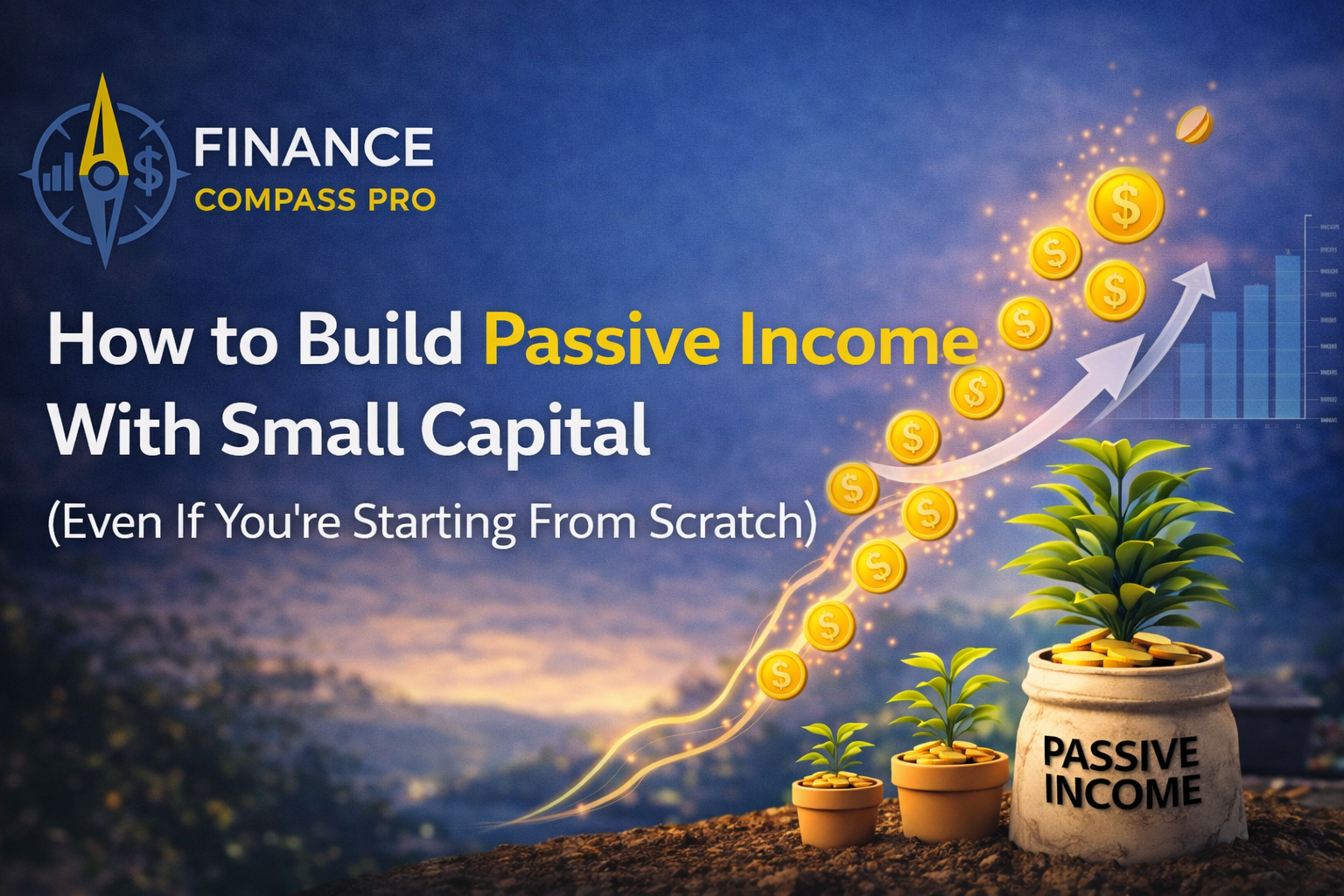
One of the biggest myths about passive income is that you need a lot of money to start.
That belief alone stops most people before they ever begin.
Because if the starting point feels impossibly far away, it’s easy to assume the destination is out of reach too. So people wait.
They keep waiting for a raise, a windfall, or some perfect moment that never quite arrives.
But here’s what most people get wrong.
Passive income doesn’t start with large capital. It starts with a system. And systems can be built – carefully, consistently – with whatever you have right now.
“The question isn’t how much you have. It’s whether you’ve started building the mechanism that makes more possible.”
In this guide, we’ll walk through exactly how to build a passive income foundation with small capital – what to invest in, how to think about the timeline, and what separates the people who get there from the ones who don’t.
→ Not sure what passive income actually means? Start here first: What Is Passive Income? A Beginner’s Guide to Building Long-Term Cash Flow
If you want to see how this turns into a real investing system – with structure, allocation, and actual execution – start here:
→ How to Build Your First Investment Portfolio (Step-by-Step Guide)

The Real Starting Point Isn’t Money – It’s Understanding
Most passive income advice jumps straight into tactics: assets to buy, platforms to use, and income targets to chase.
But tactics are rarely why people quit.
The real problem is a mismatch between expectations and reality. Beginners often invest a small amount, check the results after a few weeks, and feel disappointed because the income is almost invisible at first.
The progress feels invisible. And so they stop – right before the system would have started working.
The shift that changes everything is deceptively simple: stop focusing on the immediate return and start focusing on the mechanism.
When you invest even a small amount into income-generating assets, you’re not just earning a few dollars. You’re establishing a process. A system. A foundation that scales with every contribution you add to it.
That’s the point. Not the return today – the structure you’re building for tomorrow.
Why Small Capital Is Not a Disadvantage
Here’s something the financial media rarely says clearly: starting small is not a setback. It’s a teacher.
When you begin with a smaller amount, the stakes are low enough to learn without catastrophic consequences.
Along the way, you learn how markets move, how dividends are paid, how reinvestment compounds, and what kind of emotional discipline larger portfolios eventually require.
Most people who manage significant wealth well didn’t start that way. They started small, made mistakes at a manageable scale, and refined their approach over time.
The capital grows. The knowledge compounds alongside it.
What you’re building at $1,000 is the same system you’ll be running at $100,000. The mechanics don’t change – only the scale does.
If you’re not yet familiar with the specific assets that generate passive income, dividend-focused strategies are often the clearest starting point. Best Dividend ETFs for Passive Income breaks down how these work in practice and gives you a concrete framework to build your first income-generating position.
The 3 Principles That Make Small Capital Work
Principle 1: Consistency Outperforms Timing
The biggest mistake small investors make is waiting for the perfect moment to invest.
Markets will dip. Markets will recover. And the person who invested consistently through both outcomes will almost always outperform the person who waited for certainty that never arrived.
With small capital, time is your most powerful asset – more powerful than the amount you invest. Every month you delay is a month of compounding you can’t recover.
The single most effective strategy for small investors isn’t a sophisticated allocation or a clever selection. It’s automatic, regular contributions – regardless of market conditions.
Principle 2: Reinvestment Is the Engine
In the early stages, the income itself won’t feel significant.
A portfolio of $5,000 generating a 3.5% annual yield produces around $175 per year – roughly $14 per month. That number doesn’t change your life today.
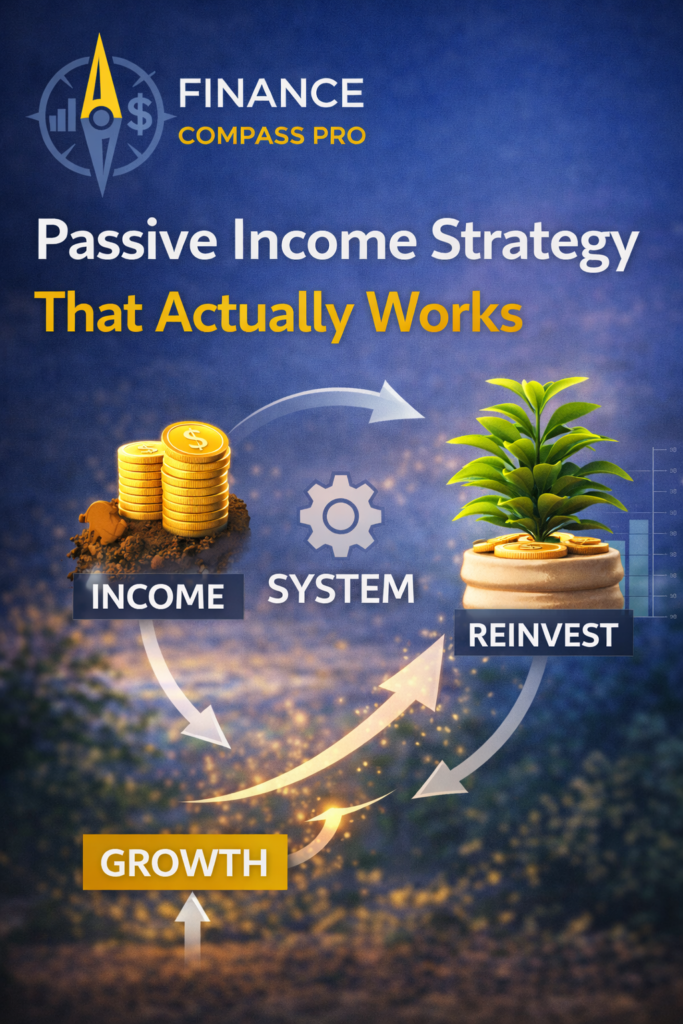
But reinvested, it buys more shares. Those shares generate more dividends. Those dividends buy more shares. And the cycle accelerates – slowly at first, then noticeably, then in ways that start to feel genuinely meaningful.
This is the compounding effect in its most practical form. It doesn’t feel dramatic in year one. It becomes undeniable by year ten.
Most brokerages offer automatic DRIP (Dividend Reinvestment Plans) – your income reinvests automatically, without requiring any action from you. Set it once. Let it run.
Principle 3: Balance From the Beginning
Income-generating assets and growth-focused assets serve different purposes – and you need both, even at the start.
A portfolio focused entirely on dividend yield generates cash flow but may limit long-term capital appreciation. A portfolio focused entirely on growth builds wealth but produces no income in the meantime.
The stronger structure holds both simultaneously.
For most beginners, a simple starting framework – two or three broadly diversified funds covering income and growth – provides more clarity than a complex multi-asset strategy. The 3 ETF Portfolio Strategy explains the concept and allocation logic; the separate 90-day guide handles execution after that decision is made.
What a Small-Capital System Actually Looks Like
With a small starting amount, the first goal is not to maximize immediate income. It is to build a repeatable system: choose a diversified core, automate contributions, reinvest distributions, and keep the structure simple enough to maintain.
The exact dollar outcome depends on your starting amount, contribution rate, investment mix, and future returns. If your starting amount is specifically $1,000 and you want a dollar-by-dollar scenario, see Passive Income With $1,000. This page stays focused on the principles that work across smaller starting amounts.
At some point, the question stops being “can this work?”
And becomes “what should I actually buy?”
When you’re ready for that step, read:
→ ETFs for Beginners: How to Choose, Compare, and Build a Simple Portfolio
The Timeline Problem – and How to Solve It
Passive income is not immediate.
It’s built. Slowly, steadily, and often invisibly at first.
The people who succeed are rarely the ones who found the best strategy. They’re the ones who accepted the timeline – and stayed consistent while everyone else grew impatient and stopped.
This is harder than it sounds. Progress in the early stages is almost invisible to the naked eye. Your portfolio grows by amounts that feel irrelevant. Your dividend income wouldn’t cover a dinner out.
But the process is working.
And the most dangerous thing you can do is abandon it before the compounding becomes visible – because that moment always arrives later than people expect, and earlier than those who stopped will ever know.
The real competitive advantage of passive income isn’t the strategy. It’s the patience to let it work.
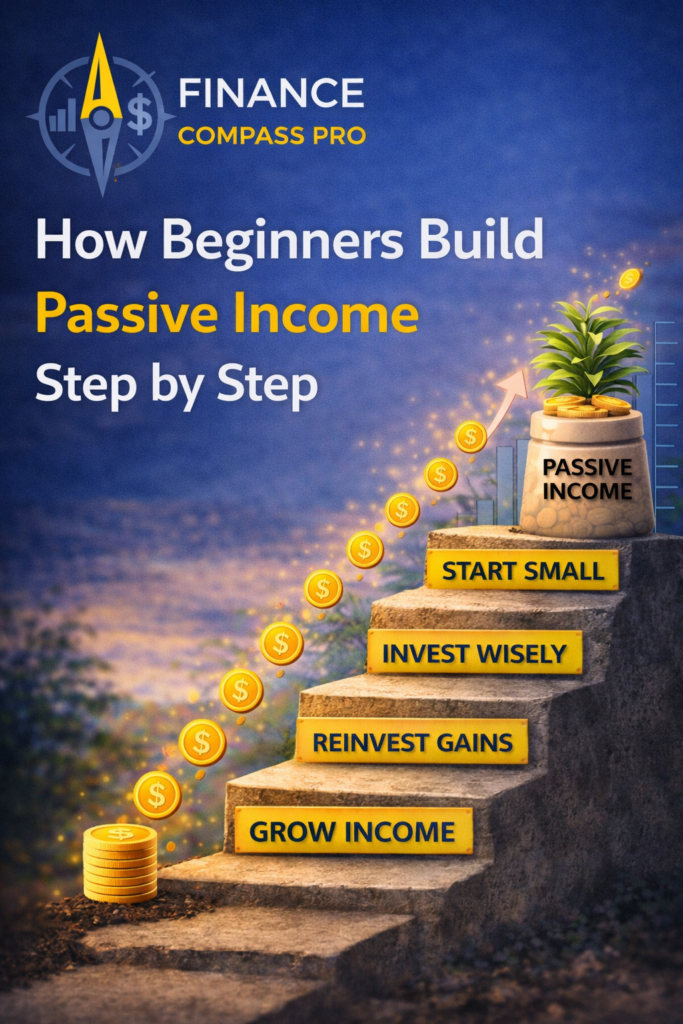
Where to Start: A Practical First Framework
You don’t need a perfect plan. You need a clear starting point and a commitment to return to it consistently.
1. Open a brokerage account. Choose a platform that offers commission-free investing and fractional shares – this allows you to start with any amount, not just full share prices.
2. Choose one or two core funds. A dividend ETF for income (like SCHD or VYM) and a broad market index fund for growth (like VTI or VOO) gives you a balanced foundation without unnecessary complexity.
Once that core foundation is in place, some investors also add small satellite positions for specific exposure. For example, REITs can provide real estate income exposure without requiring a down payment, mortgage, or direct property management.
3. Enable automatic reinvestment. Turn on DRIP immediately. Let dividends purchase additional shares automatically – remove the decision from the equation entirely.
4. Set a recurring contribution. Even $50 or $100 per month compounding over a decade creates a meaningful foundation. Automate it so it happens without requiring willpower each time.
5. Review quarterly – not daily. Checking your portfolio daily introduces emotion into a process that works best when it’s left alone. Quarterly reviews are sufficient to stay informed without reacting impulsively.
The Moment Everything Changes
There’s a point in every passive income journey that most people never reach – because they stopped too early to see it.
It’s when your investment income starts generating more investment income.
When your dividends buy shares that pay dividends that buy more shares. When your returns are compounding not just on your contributions, but on the returns themselves.
At that point, the system becomes self-reinforcing. Your money is genuinely working independently of your time and effort.
That’s when passive income stops being a concept you read about.
And starts being something you watch happen – every quarter, in your own account.
If you’re ready to move beyond understanding and actually start building, begin here:
→ How to Build Your First Investment Portfolio (Step-by-Step Guide)
This article is for informational and educational purposes only and does not constitute financial advice. Some tools or platforms may be mentioned for educational purposes to help you take action and begin investing more effectively.